




1 min read
Voices of Veranex | Mitchell Leverstone: The Power of Ethnographic Research in Healthcare
Veranex : Apr 23, 2026, 1:56:31 PM
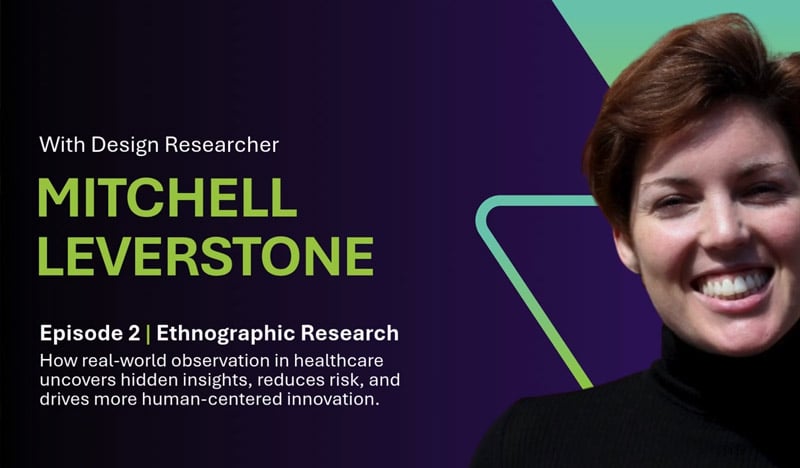
In this conversation, Mitchell Leverstone explores the role of ethnographic research in healthcare and medtech, highlighting how observing users in real-world environments uncovers critical insights that traditional methods miss. She shares firsthand stories from operating rooms around the world to illustrate how subtle behaviors, workflows, and human dynamics can reveal hidden risks and opportunities. Mitchell emphasizes that ethnography is essential for reducing uncertainty, building empathy, and informing better decision-making across the product development lifecycle. She also reflects on the limitations of AI in this space, arguing that human observation remains irreplaceable when it comes to understanding real-world complexity.
Key Takeaways:
- Real-world context matters. Clinical environments are complex, dynamic systems where workflows, workarounds, and human interactions can’t be fully captured through surveys or interviews alone.
- Ethnography reduces risk and strengthens decision-making. Grounding strategy in real-world evidence helps teams avoid assumptions and make more informed investments across the development process.
- AI impacts research, but it would not replace ethnography. While AI can analyze and predict, human nature and behaviors are unpredictable; shaped by context, nuance, and contradiction. In its current state, AI cannot fully account for the complexity of real-world environments the way human observation can.
- Challenging assumptions is essential. Even experienced teams can carry bias, and ethnographic research helps validate or overturn those assumptions with real-world data.
- Multiple methods enhance insight. Techniques like shadowing, interviews, diary studies, and workshops complement observation to build a more complete understanding of user needs.