

 Jess Willing-Pichs
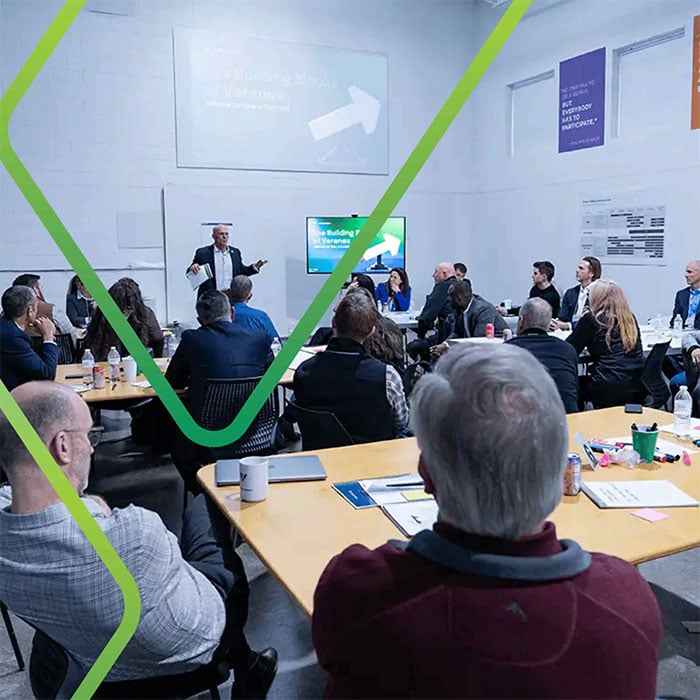
Medical device innovation workshop initiatives are not cheap. Between the precious resources of the team, the space needed, contracted vendors and that ticking clock toward the next FDA milestone, even young medical device companies can burn five figures or more. When gathering subject matter experts for strategic planning sessions, it has to be worthwhile.
Veranex teams have facilitated many medical device workshops in the past few years that include landscape and strategic planning projects, design research synthesis and early-stage concept development for a wide range between start-ups and large strategic organizations trying to figure out their innovation pipeline. And here's what we know for certain: 80% of workshop success happens before anyone walks into the room. It's primarily about expectation setting, strong alignment and preparation.
The Rarity Problem in Medical Device Development
The rarity of gathering subject matter experts in the same place at the same time makes these workshops precious. But that rarity shouldn't define them. Yet we often see a common pattern: "Oh, hi. I'm meeting you for the first time. We're at the same company."
The silos between research & development, customer operations, regulatory affairs, marketing, quality systems, and business development in medical device companies create significant knowledge gaps. In one recent workshop, the business development team had zero visibility into what R&D was actually building. Cross-functional team alignment sessions can bridge those gaps but many companies miss the opportunity.
Creating Truth-Telling Moments
The best medical device workshops create truth-telling moments. The design research fieldwork is complete. The field insights have been gathered and summarized. The clinical workflows have been observed and mapped. The pain points have been identified. Now comes the hard part: Which problems should actually be owned and addressed by the team?
Not every innovation opportunity will align with corporate objectives. Some problems are too complex. Some represent adjacencies, partnerships or acquisitions that might be too much of a reach. The workshop focus becomes where customer truth meets corporate capability.
What do good actionable outcomes look like? It requires an honest reflection of the company's actual state of affairs. Not "the c-suite will love this" or "IT can build that in three months" when IT isn't even in the room. It requires honesty about resources, capabilities, and commitment. Because the alternative is everybody going home thinking someone else will make it happen. Spoiler: They won't. 
Matching Format to Development Phase
A medical device innovation workshop format depends on where the team is in the development pathway. Different goals need different activities:
Post-research prioritization: Veranex uses multiple collaboration activities that apply different lenses to insight inputs as way to identify right-fit opportunities, considering frequency of need, severity of impact and other relevance criteria like strategic fit, regulatory burden and technology alignment. Multidimensional prioritization helps better guide medical device development decisions.
Vision-casting sessions: What could a potential opportunity look like in 10 years? What does the company need in place to get there? Then work backwards to five-year requirements, then one-year action items. This is especially useful for strategic pipeline planning.
Concept ideation: Start with concept threads. Build creative components. Then consolidate into system solutions that become early prototypes. Veranex’s innovation teams run these brilliantly, taking inspiration from a wide collection of sources and generate tangible industrial design starting points.
Medical Device Workshop Best Practices
After all these sessions, here's what actually works:
Pre-workshop preparation:
- Get the "what's keeping you up at night" discussion out of the way first
- Distribute research reports to attending teams in advance
- Surface what different departments are actually working on
- Define specific goals and outcomes, not just topics for discussion
Workshop ground rules that matter:
- Put the distractions (daily work and smartphones) aside
- Mix disciplines intentionally, avoid pairing like with like
- Encourage teams to unpack problems fully before jumping into solutions
- Document decisions in real time when everyone's still in the room
- Keep breakout groups to six people maximum so the team can blend and align. (Beyond six, conversations naturally diverge.)
- Recognized that dominant voices take over while others disengage – so it give each participant an active role and equal seat in the discussion.
The implementation reality check: Ask the hard questions. Who owns this? What resources truly exist? What are the known obstacles? What are the unknowns that need to be investigated? Taking the time to understand implementation requirements, even briefly, determines whether anything actually happens after everyone goes home.
Medical device teams love being hammers looking for nails. "We have this great algorithm" or "Our technology could solve this." But productive innovation workshops insist that the team understands why problems exist first. Only then decisions be made about which ones should be solved.
Your Medical Device Pathway Workshop Should Change Trajectory, Not Just Fill a Room.
Many consultancies run workshops. Some run them regularly and they run them well, converting actionable outcomes into money-making proposals for future project work.
But medical device product development workshops need more than generic facilitation. The Veranex difference is that we live day to day in these clinical spaces and indications. We have a rich understanding of the end users and stakeholders. We know FDA product development pathways. We understand design controls. We can lead discussions about workflow validation and user needs without a learning curve.
When leveraging prioritized pain points to drive medical device innovation strategy, user needs are an important aspect. But every innovation pathway needs to factor in regulatory pathways, 510(k) versus PMA implications, predicate device strategies. A workshop preparing for clinical trial planning has fundamentally different requirements than one evaluating market opportunities. Veranex can guide these framework discussions.
The multidisciplinary complexity is real. Biomedical engineers need to talk to regulatory. Regulatory needs to align with reimbursement. Reimbursement must coordinate with clinical. Quality can't be an afterthought. Manufacturing has to weigh in early. Miss any voice and the problems will resurface months later. Usually expensively.
ROI for Medical Device Innovation Workshops
Medical device development workshops represent major investments in time and effort, especially for startups or early-stage companies. But when a single misstep can costs millions and years of delay, the real question is whether you can afford not to run them properly.
Every workshop should produce three things at minimum: A prioritization focused the team actually can own. A starting framework for implementation. Clear identification of obstacles ahead. Without these building blocks, a $10,000 day becomes a waste.
Ready to run medical device workshops that actually deliver results? Let's talk about structuring strategic planning sessions that move from research insights to implementable innovation strategies.
About the author: Jess Willing-Pichs is a principal in the Research and Strategy group at Veranex. Our research and strategy experts pinpoint the crucial intersection of User & Stakeholder Desirability, Commercial & Business Viability, and Science & Technology Feasibility. This comprehensive analysis delivers the clarity and actionable intelligence essential for confident a new medical device innovation that truly matters.
About Research & Strategy at Veranex
Research & Strategy is where Veranex makes sure you are solving the right problem before you invest in solving it well. Grounded in ethnographic research, workflow mapping, and market-access intelligence, this team defines the opportunity space and value story that will guide design, engineering, human factors, and commercial decisions. Insights do not sit in slideware: they flow straight into Product Design & Engineering, Human Factors, and Commercial Strategy & Market Access, shaping design inputs, claims, and evidence needs. Because the same iCRO team carries that insight into preclinical, clinical, and regulatory work, you avoid reinvention, late pivots, and wasted capital.
